Japchae Korean Glass Noodle Stir Fry Recipe-Easy
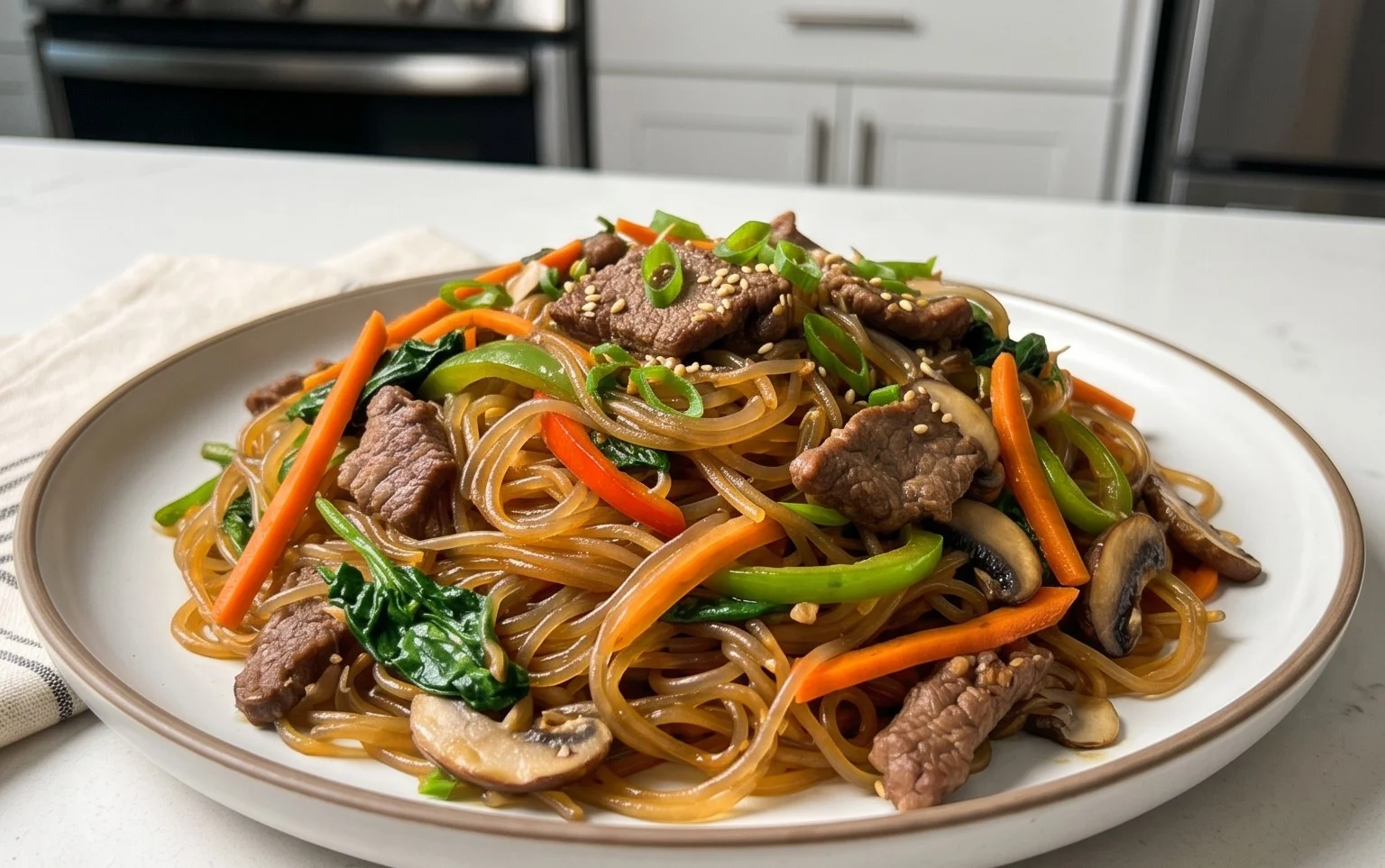
Japchae (Korean Glass Noodle Stir Fry) is a dish that truly dances on the palate. If you’ve ever experienced the vibrant flavors and delightful textures of Korean cuisine, chances are you’ve fallen head over heels for this iconic stir-fry. What makes Japchae so utterly captivating? It’s the perfect harmony of sweet and savory, chewy and crisp, all coming together in a visually stunning presentation. The star of the show, of course, are the translucent glass noodles made from sweet potato starch, which absorb the delectable sauce like little flavor sponges. But it’s not just about the noodles; the medley of colorful vegetables – think tender spinach, crisp carrots, earthy mushrooms, and pungent onions – adds both nutritional value and an explosion of taste. This isn’t just a meal; it’s a celebration on a plate, a dish that evokes comfort, joy, and a genuine appreciation for the art of Korean cooking. Get ready to master the art of this beloved Japchae (Korean Glass Noodle Stir Fry) in your own kitchen!
Japchae (Korean Glass Noodle Stir Fry)
Japchae is a classic Korean dish that’s incredibly popular for its vibrant colors, delightful textures, and savory-sweet flavor profile. It’s a dish that’s both beautiful to look at and incredibly satisfying to eat, making it a perfect option for family dinners, potlucks, or even a special occasion. At its heart, Japchae is a stir-fry featuring translucent sweet potato glass noodles (dangmyeon) tossed with a medley of colorful vegetables and tender strips of meat. The magic of Japchae lies in the harmonious blend of textures – the chewy noodles, the crisp vegetables, and the succulent protein, all coated in a rich, flavorful sauce. While it might seem like a lot of components, each element plays a crucial role in creating this beloved Korean staple. Let’s dive into how you can bring this delicious dish to your own kitchen.
Ingredients:
Cooking Instructions:
Preparing Japchae involves several steps, but each one is straightforward and contributes to the final delicious outcome. We’ll break it down into manageable phases.
1. Preparing the Noodles and Marinating the Beef
Start by rehydrating your sweet potato glass noodles. Bring a large pot of water to a boil and cook the noodles according to package directions, usually for about 6-8 minutes, until they are tender but still have a slight chew. Be careful not to overcook them, as they can become mushy. Once cooked, drain the noodles thoroughly and rinse them under cold water to stop the cooking process and prevent them from sticking. You can then snip them with kitchen shears a few times to make them easier to eat. While the noodles are cooking, prepare your beef. In a medium bowl, combine the beef strips with 1 tablespoon of soy sauce, 1 teaspoon of sesame oil, a pinch of black pepper, and a pinch of salt. Mix well to ensure the beef is evenly coated. Let it marinate for at least 15-20 minutes at room temperature, or longer in the refrigerator for a deeper flavor. This marination step is key to infusing the beef with savory notes.
2. Cooking the Vegetables and Egg
Now it’s time to prepare our colorful vegetable components. Heat about 1 tablespoon of oil in a large skillet or wok over medium-high heat. Add the thinly sliced yellow onion and stir-fry for about 2-3 minutes until it starts to soften and become translucent. Next, add the julienned carrots and sliced mushrooms. Continue to stir-fry for another 3-4 minutes until the carrots are tender-crisp and the mushrooms have released some of their moisture and are nicely browned. Season these vegetables lightly with salt and pepper. Remove the cooked vegetables from the skillet and set them aside in a bowl. In the same skillet (you may need to add a tiny bit more oil if it’s dry), pour in the beaten eggs. Cook them like a thin omelet, swirling the pan to create an even layer. Once cooked, let it cool slightly, then roll it up and slice it into thin strips. This will be a beautiful garnish and adds a lovely eggy flavor. Finally, quickly wilt the baby spinach by tossing it in the hot skillet for about 30 seconds. It will shrink down considerably. Set this aside with the other vegetables.
3. Stir-Frying the Beef and Assembling the Sauce
In the same skillet, add a little more oil if needed, and increase the heat to medium-high. Add the marinated beef strips and stir-fry until they are browned and cooked through, which should only take a few minutes. Avoid overcrowding the pan; cook the beef in batches if necessary to ensure it browns nicely rather than steams. Once the beef is cooked, remove it from the skillet and set it aside with the vegetables. Now, let’s make our signature Japchae sauce. In a small bowl, whisk together the remaining soy sauce (6 tablespoons), honey, brown sugar, and toasted sesame oil. This sauce is the soul of the dish, balancing sweet, savory, and nutty notes. Taste and adjust the sweetness or saltiness to your preference.
4. Combining Everything and Finishing Touches
Now for the grand finnon-alcoholic ale – bringin extractg all the elements together. In a very large bowl or a clean skillet/wok, combine the cooked and drained glass noodles, the stir-fried beef, the cooked carrots, onions, mushrooms, wilted spinach, and the cut green onions. Pour the prepared Japchae sauce over everything. Using tongs, gently toss and mix all the ingredients until the noodles and other components are evenly coated with the sauce. This is where you want to be thorough but gentle to avoid breaking the noodles. Continue to toss for a couple of minutes over low heat, allowing the noodles to absorb the flavors of the sauce and everything to warm through.
5. Final Seasoning and Serving
Once everything is well-combined and heated through, give your Japchae a final taste. Adjust seasoning with salt and pepper if necessary. The flavors should be well-balanced. Serve the Japchae immediately in individual bowls or on a large platter. For an extra touch of authenticity and flavor, sprinkle generously with toasted sesame seeds. The bright colors and inviting aroma of this Japchae are sure to impress, and its delicious taste will have everyone coming back for seconds. Enjoy this wonderfully satisfying Korean classic!
Conclusion:
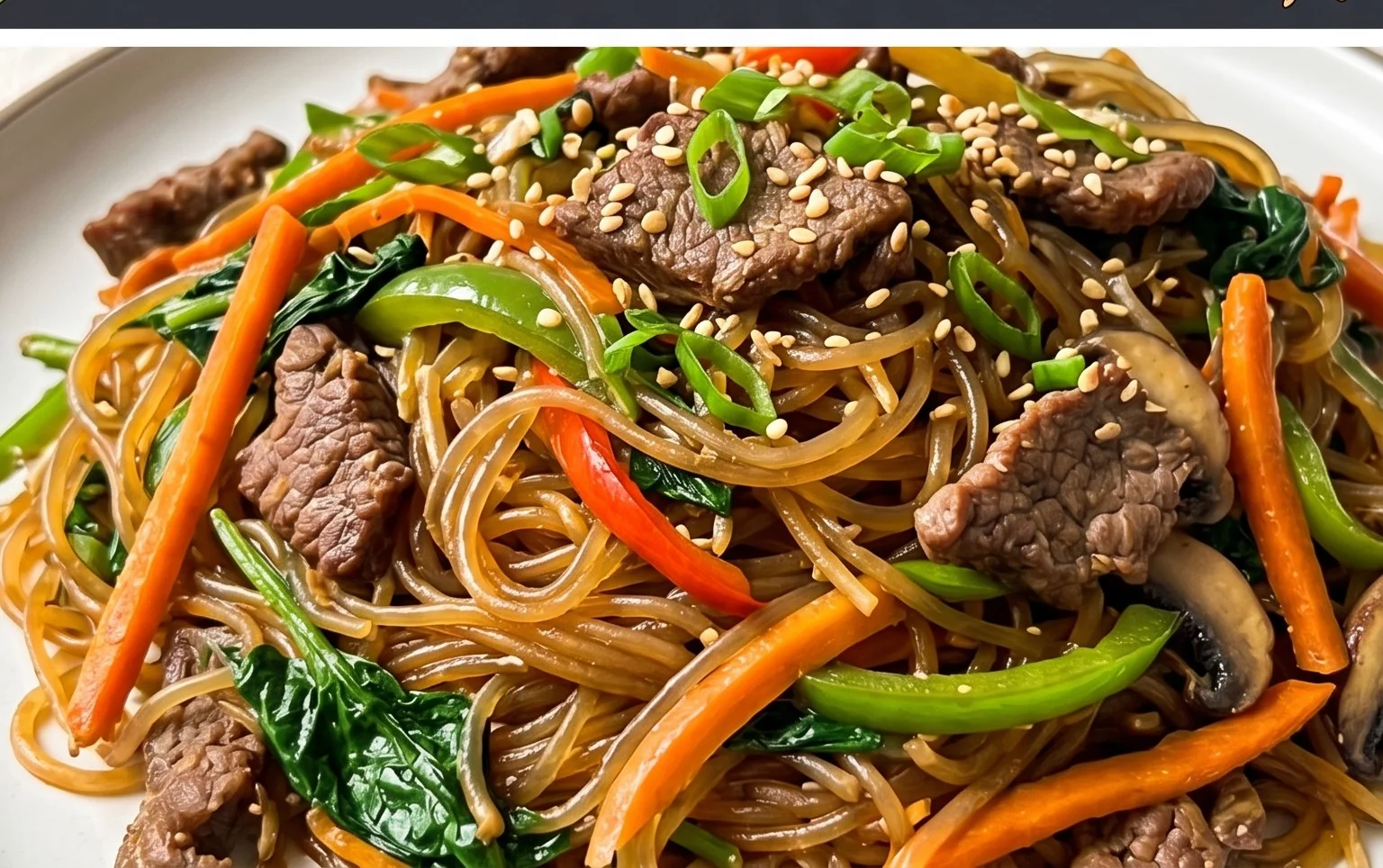
There you have it – your guide to creating a fantastic Japchae, the quintessential Korean glass noodle stir fry! This dish is an absolute winner for so many reasons: its delightful chewy texture from the sweet potato noodles, the vibrant medley of colorful vegetables, and the savory-sweet umami punch of the sauce. It’s incredibly versatile, making it perfect for a quick weeknight dinner, an impressive side dish for gatherings, or even a satisfying vegetarian main. Don’t be intimidated by the ingredient list; each component contributes to the beautiful symphony of flavors and textures that makes Japchae so special.
I truly encourage you to give this Japchae recipe a try! It’s a rewarding culinary adventure that will introduce you to the incredible depth of Korean cuisine. Feel free to get creative with your vegetable choices – mushrooms, bell peppers of any color, and spinach are all fantastic additions. For a heartier meal, consider adding some thinly sliced beef or chicken. Serve it hot or at room temperature; it’s delicious either way. This dish is meant to be enjoyed, shared, and savored!
Frequently Asked Questions:
What are glass noodles made of?
The “glass noodles” in Japchae are typically made from sweet potato starch, giving them their characteristic translucent appearance and delightfully chewy texture when cooked.
Can I make Japchae ahead of time?
Yes, you can prepare many components of Japchae ahead of time. The vegetables can be pre-chopped and even stir-fried separately a day in advance. The noodles can also be cooked and cooled. However, it’s best to combine and toss everything with the sauce just before serving to prevent the noodles from becoming too mushy and to ensure all the flavors are at their peak.
What are some other serving suggestions for Japchae?
Japchae is wonderful as a standalone dish, especially when packed with vegetables. It also makes an excellent side dish for Korean BBQ, alongside stews like Kimchi Jjigae, or as part of a larger Korean meal spread. You can also enjoy it cold as a refreshing noodle salad.
Japchae (Korean Glass Noodle Stir Fry)
A popular Korean savory and slightly sweet noodle dish made with glass noodles, vegetables, and protein.
Ingredients
-
12 ounces sweet potato glass noodles
-
16 ounces pork (cut into strips (cuts like flank, skirt, ribeye are great))
-
2 large egg (beaten)
-
1 large carrot (peeled and julienned)
-
1 medium yellow onion (thinly sliced)
-
3 mushrooms (thinly sliced (any mushrooms of your choice))
-
2 cups baby spinach (packed)
-
2 stalks green onion (cut into 1 inch pieces)
-
oil (for cooking)
-
Toasted sesame seed ((optional for garnish))
-
Salt and black pepper (as needed)
-
7 tablespoons soy sauce (light sodium)
-
3 tablespoons honey
-
2 tablespoons brown sugar
-
2 tablespoons toasted sesame oil
Instructions
-
Step 1
Cook glass noodles according to package directions, drain, and rinse with cold water. Toss with 1 tablespoon of sesame oil and a pinch of salt and pepper. -
Step 2
In a bowl, marinate the pork strips with 2 tablespoons of soy sauce, 1 tablespoon of honey, 1 tablespoon of brown sugar, and a pinch of salt and pepper for at least 15 minutes. -
Step 3
Stir-fry the marinated pork in a lightly oiled pan until cooked through. Remove from pan and set aside. -
Step 4
In the same pan, stir-fry the sliced onions and mushrooms until softened. Add the julienned carrots and cook for another 2-3 minutes until tender-crisp. -
Step 5
Add the cooked glass noodles, stir-fried pork, and baby spinach to the pan. Stir well until spinach wilts. -
Step 6
Prepare the sauce by whisking together the remaining 5 tablespoons of soy sauce, 2 tablespoons of honey, 1 tablespoon of brown sugar, and 1 tablespoon of sesame oil. Pour the sauce over the noodles and vegetables. Toss until everything is evenly coated. -
Step 7
Gently fold in the beaten eggs, stirring until they are just cooked and incorporated. Add the green onions and toss to combine. -
Step 8
Season with additional salt and pepper to taste. Garnish with toasted sesame seeds if desired.
Important Information
Nutrition Facts (Per Serving)
It is important to consider this information as approximate and not to use it as definitive health advice.
Allergy Information
Please check ingredients for potential allergens and consult a health professional if in doubt.