
Easy Miso Soup Recipe – Quick & Delicious Japanese Flavor
Miso soup recipe is more than just a starter; it’s a warm hug in a bowl, a comforting embrace that awakens the senses. There’s a reason why this simple yet profound Japanese dish is a beloved staple in homes and restaurants worldwide. It’s that umami-rich, savory depth that miso paste provides, a flavor profile that’s both grounding and incredibly satisfying. We love miso soup for its versatility – it can be as minimalist or as elaborate as you desire. What truly makes this particular miso soup recipe special is its ability to be incredibly quick to prepare, making it perfect for busy weeknights, yet still delivering an authentic and deeply flavorful experience. It’s the perfect way to start any meal, or even enjoy as a light lunch on its own. Get ready to discover how easy it is to bring this classic comfort into your own kitchen.
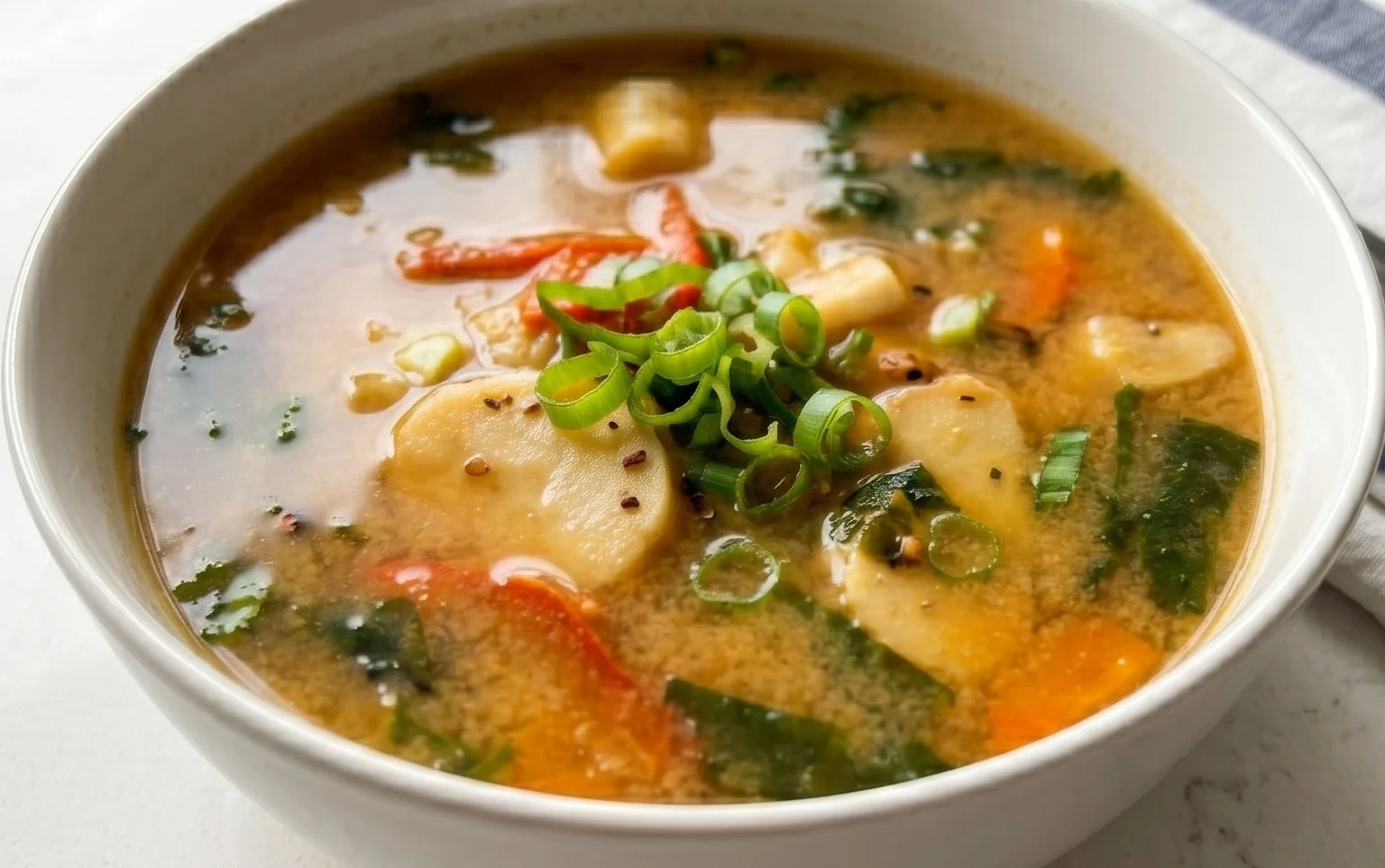
Miso Soup Recipe
There’s a comforting warmth that washes over you with every spoonful of miso soup. It’s a staple in Japanese cuisine, often served as an appetizer or a light meal, and for good reason. This humble soup is incredibly satisfying, packed with umami flavor, and surprisingly easy to make right in your own kitchen. Forget those instant packets; with just a few key ingredients, you can create a deeply flavorful and authentic miso soup that will become a regular in your rotation. It’s the perfect antidote to a chilly evening or a refreshing accompaniment to a more elaborate meal.
This recipe is designed to be simple enough for even novice cooks, while still yielding a rich and delicious result. The beauty of miso soup lies in its adaptability. While I’m providing a classic preparation, feel free to experiment with additions once you’ve mastered the basics. Think of this as your foundational miso soup, a canvas for your culinary creativity.
Ingredients:
Cooking Instructions:
Let’s get started on crafting this delightful soup. The process is straightforward and, best of all, quick!
Step 1: Prepare the Dashi and Rehydrate the Seaweed
Begin extract by bringin extractg your dashi to a gentle simmer in a medium saucepan over medium heat. Dashi is the soul of miso soup, providing that foundational savory depth. If you’re using instant dashi granules, follow the package instructions for the correct water-to-granule ratio. If you’re making dashi from scratch using kombu and katsuobushi, ensure it’s properly prepared and strained. While the dashi is heating, take your dried seaweed and place it in a small bowl. Add just enough cool water to cover it. Let it sit for about 5 to 10 minutes. You’ll notice it expand and soften beautifully. Once rehydrated, gently squeeze out any excess water. If the pieces are too large, you can roughly chop them into bite-sized morsels.
Step 2: Add the Seaweed to the Dashi
Once the dashi is gently simmering (avoid a rolling boil, as this can diminish its delicate flavor), add the rehydrated seaweed to the pot. Let it simmer for another 2-3 minutes. This allows the seaweed to fully rehydrate and infuse its subtle oceanic notes into the broth. You’ll see it float around, adding visual appeal and a pleasant chegrape juicess to the finished soup. This brief simmer also ensures the seaweed is tender and not at all rubbery.
Step 3: Introduce the Silken Tofu
Now, it’s time to add the silken tofu. Gently slide the pre-cut pieces of silken tofu into the simmering dashi and seaweed mixture. Be careful not to break them up too much; they are delicate. Allow the tofu to heat through for about 2 to 3 minutes. The goal here is simply to warm the tofu, not to cook it extensively. Silken tofu has a wonderfully smooth, melt-in-your-mouth texture that is characteristic of good miso soup. If you prefer a firmer tofu texture, you could use medium or firm tofu, but silken is traditionally preferred for its delicate mouthfeel.
Step 4: Dissolve the Miso Paste – The Crucial Step
This is arguably the most important step in making miso soup, and it’s where many people make a slight misstep. You never want to boil miso paste. Boiling can kill its beneficial probiotics and diminish its complex flavor profile. To properly incorporate the miso, take a ladleful of the warm dashi broth from the pot and pour it into a small bowl. Add your miso paste to this bowl. Using a whisk or a fork, gently stir the miso paste into the broth until it is completely dissolved and no lumps remain. This tempering process ensures the miso blends smoothly into the soup without clumping and preserves its delicate aroma and flavor. Start with 2 tablespoons and you can always add more if you prefer a stronger miso flavor. Taste as you go!
Step 5: Combine and Serve
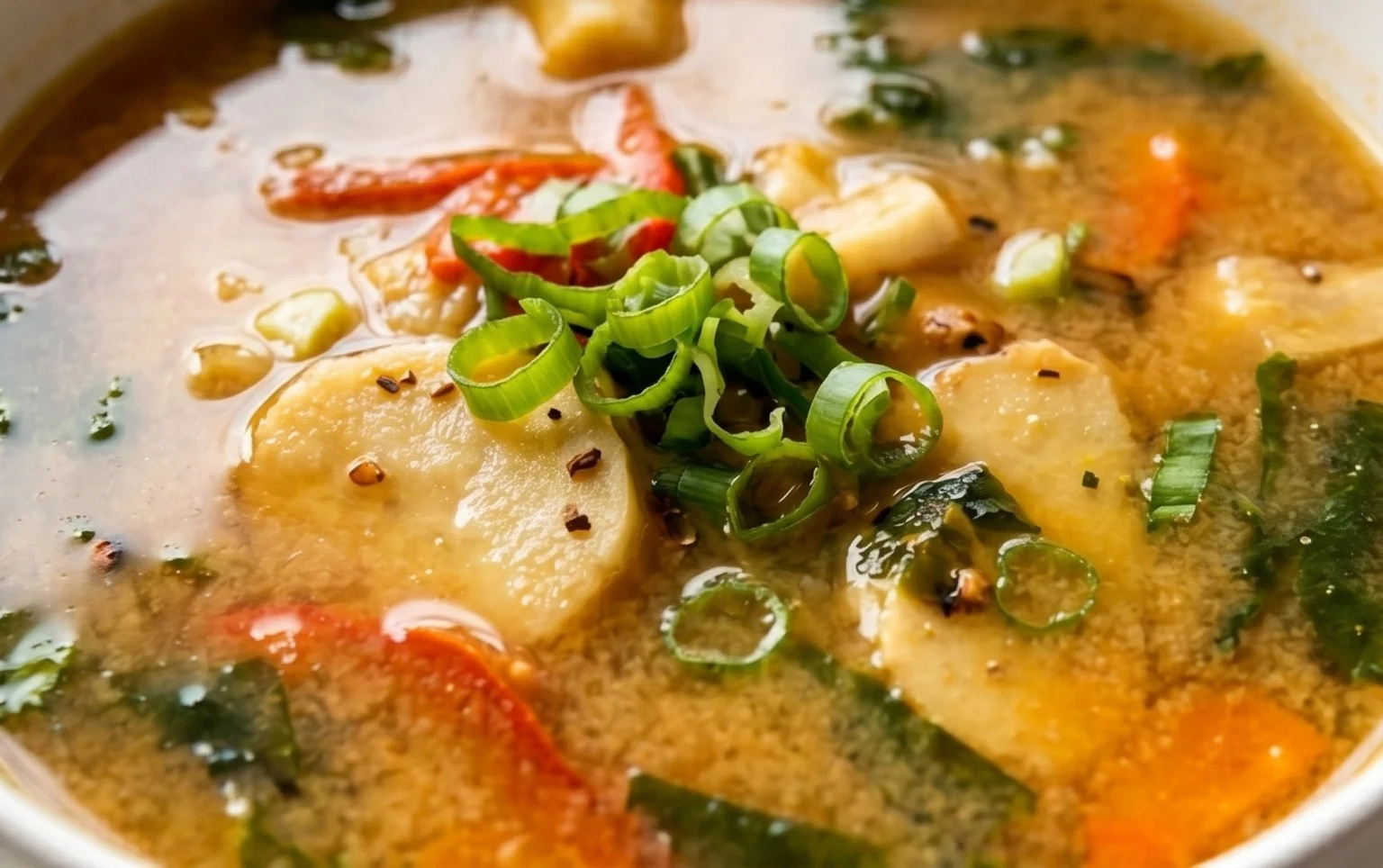
Once the miso paste is fully dissolved in the small bowl, carefully pour the miso mixture back into the main saucepan with the dashi, seaweed, and tofu. Stir gently to distribute the miso evenly throughout the soup. Heat the soup for another minute or two, just until it’s warmed through. Again, resist the urge to let it boil. The soup should be steaming hot, not bubbling furiously. Ladle the miso soup into your serving bowls. Garnish generously with the chopped scallions. The fresh, vibrant green of the scallions adds a pop of color and a subtle oniony bite that beautifully complements the rich, savory miso broth. Serve immediately and enjoy the comforting, umami-rich goodness of your homemade miso soup!
Conclusion:
There you have it! Crafting your own delicious and authentic miso soup recipe at home is incredibly rewarding. This recipe is fantastic because it’s not only nourishing and comforting but also surprisingly quick to prepare, making it perfect for a weeknight meal or a light starter. The delicate umami flavor of miso, combined with the subtle sweetness of dashi and the fresh ingredients, creates a truly satisfying experience. I encourage you to give this miso soup recipe a try – you’ll be amazed at how easy it is to achieve such depth of flavor.
For serving suggestions, this miso soup is wonderful on its own as a light meal or a palate cleanser before a larger Japanese-inspired feast. It also pairs beautifully with rice, sushi, or grilled fish. Feeling adventurous? Experiment with variations! Try adding silken tofu for extra protein, mushrooms for an earthy note, or even a sprinkle of sesame oil for a nutty aroma. You can also swap out the traditional wakame seaweed for finely chopped spinach or bok choy. Don’t be afraid to make it your own!
Frequently Asked Questions:
What kind of miso paste should I use?
You can use various types of miso paste, such as white (shiro) miso for a milder, sweeter flavor, red (aka) miso for a richer, more robust taste, or awase (mixed) miso for a balanced profile. White miso is a great starting point for begin extractners.
Can I make miso soup ahead of time?
While the dashi base can be made ahead, it’s best to add the miso paste just before serving. Miso is a live ingredient, and prolonged heating can diminish its probiotic benefits and delicate flavor. Reheat gently and avoid boiling after adding the miso.
What are some other popular add-ins for miso soup?
Beyond the classics, people often add ingredients like green onions, daikon radish, clams, shrimp, or even small pieces of chicken. Each addition brings a unique texture and flavor dimension to the soup.
Miso Soup
A simple and comforting miso soup recipe made with dashi, tofu, seaweed, and miso.
Ingredients
-
2½ cups Dashi
-
1 heaping tablespoon dried seaweed
-
4 oz silken tofu (cut into small pieces)
-
2-2½ tablespoons white miso paste (or to taste)
-
1 tablespoon scallion (chopped)
Instructions
-
Step 1
Bring the dashi to a simmer in a medium saucepan. -
Step 2
Add the dried seaweed and simmer for 2-3 minutes until rehydrated. -
Step 3
Add the cubed silken tofu and heat gently for about 1 minute. -
Step 4
In a small bowl, whisk the miso paste with a ladleful of the hot dashi until smooth. This prevents clumps. -
Step 5
Stir the dissolved miso paste back into the saucepan. Do not boil after adding miso, as it can affect the flavor and nutrients. -
Step 6
Ladle the soup into bowls and garnish with chopped scallions.
Important Information
Nutrition Facts (Per Serving)
It is important to consider this information as approximate and not to use it as definitive health advice.
Allergy Information
Please check ingredients for potential allergens and consult a health professional if in doubt.